

Don’t Believe Everything You Think
August 28, 2025
When Smart AI Tools Make Dumb Mistakes
November 25, 2025
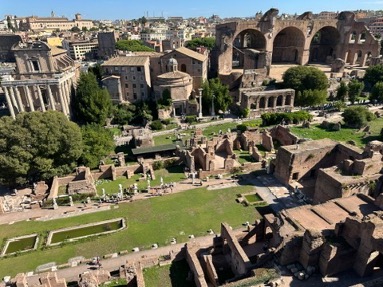
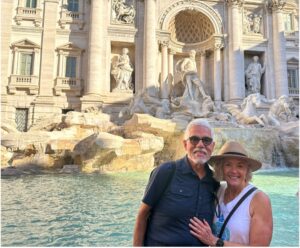 I’m just returning from a vacation in Rome. We strolled through partially restored and preserved ruins with clearly defined rooms, hallways, fountains, community gathering spaces, and worship centers. I imagined people hustling about, shopping at the market or hawking olives and wine, pulling a child out of the path of an oncoming horse, and cooking dinner over an open fire. In addition, after viewing so many works of art in the Vatican Museums, by the time we reached the Sistine Chapel, I almost thought, “Oh great, another masterpiece.” Then on to the Trevi Fountain. If that doesn’t stop you in your tracks for sheer size and beauty, something may have died inside you!
Roman Resilience
 Since my knowledge of Roman history was mostly “Remus and Romulus were raised by a she-wolf,” I’m upgrading my knowledge base via The Rise of Rome (lectures from The Great Courses™). Taught by a college professor, I definitely feel back in school!
Scholars generally agree that Rome wasn’t uniquely smiled on by the many gods of the day or imbued with extraordinary might, intellect, technology or even leadership. Rather, what distinguished Romans from Italians at the time was a dogged persistence. Rome simply never gave up. If they lost a battle or war, they regrouped and came back and attacked again. If that failed, they did it again and again until they emerged victorious.
Rome lost a lot of battles. But when the city was sacked by the Gauls, Rome took a lesson and built a double circuit of walls to better protect their city. The battle might have been lost but the lessons weren’t and it was the last time a foreign enemy would set foot in Rome for 800 years!
Rome was also clear about its goals and evaluated obstacles in the way. For example, they didn’t typically massacre or enslave their opponents and heavily tax them. Rather, they integrated them into Roman life, extending varying degrees of Roman citizenship. Newly minted citizens could achieve higher levels of citizenship but one absolute requirement was that they commit their men to military service for wars Rome waged in the future.
Another obstacle was getting those soldiers to the battle front. To facilitate rapid movement of the groups, Rome began building the great Roman road system. Many are still in use today, 2000 years later.
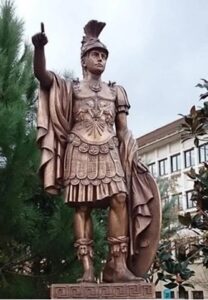 Southern Italy was last to be conquered for Rome to bring all of the Italian cities under its control. Many of those cities were former Greek colonies. But there the Romans encountered an opponent with dramatically different cultural attitudes. The residents were culturally sophisticated and wealthy. The Greeks hired the most skilled mercenaries in the world. Foremost among them was King Pyrrhus of Epirus. In 280 BC he arrived in Italy with an army of 30,000 highly trained Greek mercenaries—and 20 war elephants. (War elephants? That’s a story for another time).Romans fought hard but Pyrrhus and his men knew what they were doing and won decisively. Yet the Romans managed to inflict heavy casualties. As victor, Pyrrhus expected the Romans to open peace negotiations. But instead Roman military leaders refused to even speak to Pyrrhus’ emissaries.
The Romans were not discouraged by their initial defeat. But the following year, Pyrrhus, now exasperated by the Romans’ stubbornness, marched directly on Rome. Again the Romans fought with grit and determination, inflicted heavy casualties again but ultimately were no match for the professionals led by Pyrrhus. After the battle, Pyrrhus reportedly declared, “If I win another victory like this one, I will be ruined.” Today, we use the phrase “Pyrrhic Victory” when the costs of winning are tantamount to a defeat. Interestingly, the Romans regrouped, put together another army and went at it again, this time achieving a marginal victory. At this point, Pyrrhus simply gave up and departed Italy, having won all the major battles but losing the war.
Lessons from the Romans
On my 9-hour flight home, I’ve been thinking about getting back to the work I love, the clients I serve and my colleagues with whom I am privileged to work. I’m only about 1/4 of the way through these lectures but here are some of the lessons the Romans have taught me so far.
- Be clear about your goals. Rome wanted power. You might want stability, peace or to co-parent well. Be clear about your real goals for the process and your future life.
- Never give up. If your goal is a peaceful relationship with your co-parent, keep fighting for that. You may give on some smaller battles but ultimately win the war.
- Take the Lesson. If something’s not working, stop blaming your “opponent.” Start building roads. Could you trade a financial asset to keep your home? Offer more support so your kids can stay in the same school district? Rome didn’t dwell on setbacks—they adapted.
- Beware the Pyrrhic victory. You can “win” the house, the schedule, the argument. But if the emotional or financial cost poisons everything after… was it worth it? Don’t let the pursuit of victory destroy what you’re really fighting for.
Every battle has complexities and nuances. It’s not always so simple as to say you should never give up or you should refuse a win to avoid a Pyrrhic Victory. There’s no one right way through it. But stepping back to look at your big picture—your version of Rome—can help you stay grounded and focused and prevail like the Romans.
Wishing you wisdom,
Deborah